History and Mission
Cameroon Wildlife Conservation Society, CWCS, is a lead national environment NGO in Cameroon founded in February 1997. The organisation’s head office is in Yaoundé. CWCS is administered by a board of directors with more than 100 registered members comprising environment experts, young conservation professionals and students. It has a signed agreement with the Government of Cameroon represented by Ministry of Forestry and Wildlife, MINFOF, to provide technical assistance in the domains of nature conservation and sustainable development. CWCS currently has a permanent staff of 15 personnel comprising biologists, sociologists, accountants and support staff and 3 main field bases in Nkongsamba for Manenguba montane ecosystems, Galim-Tignere for Tchabal Mbabo Adamawa highlands and montane ecosystems and Mouanko, for management of Douala-Edea national park with associated mangrove forest and marine coastal ecosystems.
Our Vision
By 2035, threatened and fragile ecosystems are managed sustainably in safeguard of their ecological integrity and contribute to improve livelihood of surrounding local communities.
Our Mission
Collaborating with Government of Cameroon, technical partners, local communities and other key stakeholders on nature protection within critical ecosystems and promoting sustainable natural resource use to contribute to improve livelihoods of local communities.
0
Funds Raised

0
Acres Conserved

0
Volunteers Registered

0
Countries Worldwide
Principal thematic and Geographical areas
Protected areas establishment: This is principally focused on conducting multiple resource inventories to identify and map out new protected areas especially within threatened ecosystems. Some of the critical ecosystems identified are the marine coastal ecosystem that includes the mangrove forests in Douala-Edea littoral zone, the extensive Nyong upper valley wetlands in South East and the Trans border Tchambal Mbabo montane forests & Savana massif in north western zone of Cameroon.
Collaborative management: Involving stakeholders in the overall natural resource management process as demonstrated by its Douala-Edea Forest Project that it is critical to wining their support to conservation work.
Ecological monitoring: Comprehensive monitoring is required to provide a sound scientific base of checking trends in resource use over time and likewise to help shape management plans for the protected areas.
Gender issues: Carrying out gender mainstreaming programmes to facilitate the integration of women in the overall decision making process.
Environmental education: CWCS supports the development and implementation of school environmental education programmes at grassroots level including the activities of school nature clubs.
Networking and lobbying: At national level, CWCS is working with several national and international NGOs and donor agencies to build strong networks that could be used to influence national biodiversity conservation and environmental policies. On a regional level, CWCS collaborates with organisations such as Mangrove Action Project (MAP) based in Los Angeles United States of America, to develop a West and Central Africa regional national NGOs network for protection of mangroves and also promoting innovative collaborative approaches to ensure integration of mangrove communities in overall management of natural resources.
Our Partners



Our Team
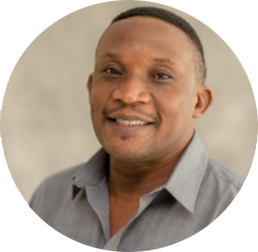
Leonard Usongo
Leonard Usongo International Environment Expert Leonard holds a PhD in wildlife management and has completed several professional training programs in transboundary landscape design and management, sustainable forest management, protected areas management, design and implementation of multi thematic monitoring programs etc. Leonard Usongo has more than 25 years of field experience as senior conservation biologist. He was worked and occupied different positions with international conservation and development organizations such as WWF, WCS, GIZ, IUCN and Birdlife International. He has extensive knowledge working in Africa and Congo basin in particular As an independent international environment consultant, Leonard has extensive experience developing multiple donors� and multi thematic projects funded by GEF, AFDB, EU and GCF etc. Over the past 5 years, as Lead Consultant, he has led multi-disciplinary teams to develop several conservation projects funded by GEF and other donors on a wide range of thematic areas particularly sustainable forest management, REDD+, integrated land use planning, trans boundary conservation, community livelihoods, empowerment of indigenous people, transhumance, and forest landscape restoration etc. He has extensive knowledge on cross cutting issues such as grievances mechanism, One Health Concept, environmental and social safeguards, gender, and indigenous people. He has experience developing specific documents of international standards on cross cutting issues using different formats of donors; eg. World Bank, UNEP, EU, WWF, IUCN, and GEF. Leonard has excellent communication skills and experience working with multi-disciplinary teams to develop high profiled quality complex projects in a timely manner.
1. National PresidentKabelong Banoho Louis-Paul-Roger
Kabelong Banoho Louis-Paul-Roger holds a PhD in Botany-Ecology and a Master's degree in Biodiversity and Forest Production from the University of Yaoundé. Roger has over 15 years' experience in forest management, wildlife management, GIS and remote sensing, assessment and modeling of greenhouse gas emissions, forest landscape restoration, landscape conservation strategies, and digital/innovative technologies for wildlife and vegetation monitoring. Dr. Roger has worked as a consultant on various GEF projects in Cameroon, Chad and the Congo Basin. He has had the opportunity to support and effectively monitor multiple processes contributing to better reconciliation of the objectives of sustainable natural resource management and livelihood needs of indigenous and local communities. On these initiatives, He contributed to the design, implementation and evaluation of several conservation projects. Roger is also a lecturer and researcher at the University of Yaoundé and Senior Biologist for Cameroon Wildlife Conservation Society (CWCS) and research scientist for an environmental consultancy firm, Forests and Wetlands Consulting (FWC). He has wide-ranging experience in biodiversity conservation and assessment and management tools. .
2- Principal Technical Adviser